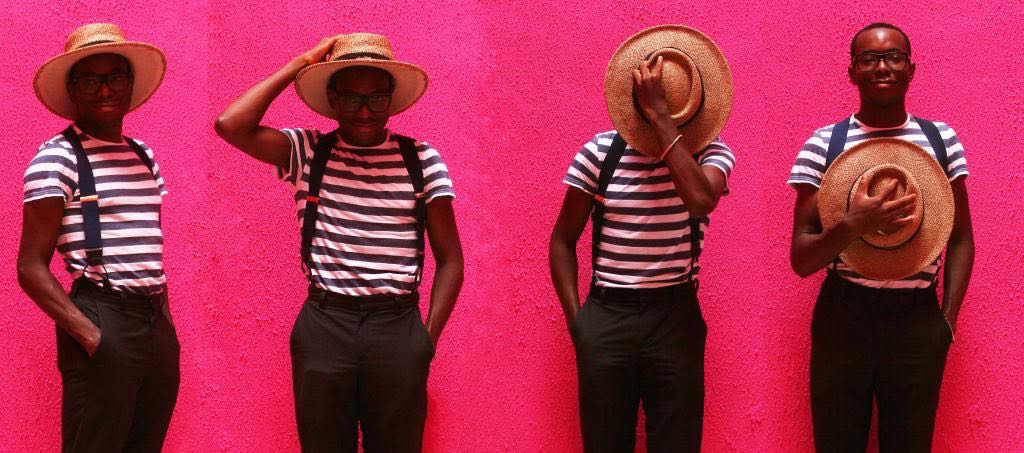
How to survive the recession: Think Peer to Peer Lending

20:45:00
By August 2016, many Nigerians had learned a new word: recession. Two consecutive quarters of negative economic growth confirmed by the National Bureau of Statistics. It was a word that had not shown itself since 1994. Time had long eroded its meaning. For some, a recession means very little. It’s something heard in the news and mentioned in articles not unlike this one, their bank accounts and their incomes secure enough that they do not have to worry. But for the economically vulnerable, it is as good as an excruciatingly slow death. They watch their loved ones lose their jobs and live in fear that they will lose theirs sooner rather than later. Life in Nigeria was difficult enough when the dollar was cheap and the economy was undisputedly Africa’s largest. Now that the economy is in recession it is almost intolerable.


On the streets of Lagos the harsh realities of rising unemployment and inflation are apparent. “Masses are crying loud” said one pedestrian at the Adetokunbo Ademola round about in Lagos’ Victoria Island. Before she could finish, another passer-by chimed in. “People are crying.” Another woman lifted her hands despondently and said, “If they (the government) want people to perish and die and go, let them do it because I have never seen this kind of government before.” One man said that he had to keep two of his four children at home because he could no longer afford their school fees. Others reported much of the same. Rising prices leading to cutbacks on expenses that were once considered necessities. Any real hope that the government is capable of dealing with the situation is dying. 


When times are hard and real income is falling, people look for alternative sources of income to meet their needs. They take loans from banks and other financial organisations. However, with interest rates in the double digits this is not an option many can afford. The First City Monument Bank interest rate for general commerce ranges from 17.5 - 30%, and across the industry customers applying for personal loans or SME loans could face rates as high as 80%. As if that wasn’t bad enough, according to Lafferty Cards and Consumer finance, the probability of a loan being accepted is about 7%, but this is not unusual in a recession. In a recent interview with Premium times, the Chief Executive, Rest of Africa Standard Bank Group, Sola David-Borha said, “With economic recession, customers and companies find it very difficult to pay loans. Consumers have not been paid salaries and are unable to service loans.” As banks do not have the regulatory or legal framework to ensure repayment, or a well developed method of assessing risk, they have very little choice but to charge high interest rates. Furthermore as the Monetary Policy Committee has kept interest rates high, the bank rates have little room to manoeuvre but up.  


As rational as this method of operating may seem, it is not without its drawbacks. In a 2011 survey of the Nigerian middle class by Renaissance Capital 60 per cent of the respondents claimed it was impossible to borrow small amounts from formal institutions, 84 per cent had never applied for a loan, and a mere 20 per cent saw banks as the possible providers of loans. This is shocking when you consider that 20 million small and medium enterprises account for around 80 per cent of all businesses and  they employ a total of thirty-one million people. The situation has not gone unnoticed. Prof. Akpan Ekpo, the head of The West African Institute for Financial and Economic Management (WAIFEM) said that the hard conditions faced by SMEs was caused by the lack of access to funds for working capital needs as a result of the behaviour of banks.This peculiar situation raises a necessary question. If 84 per cent of the middle class have never applied for a loan from an official financial institution then where or from whom do they borrow in times of need?


Most people are likely to borrow from the three fs: family, friends and fools. They are the first resort. A fool and his money are soon parted and family and friends are willing to dilute cynicism with affection. As some ask, what it is a little money between friends? But there’s a problem here. While blood may be thicker than water, it isn’t more binding than a well constructed contract. There’s no legal or formal framework and because of this both parties are exposed. Friends can recall the debt before it’s due, and you could choose to not pay back. In addition to this, friends and family are unlikely to have the resources to truly support the dream you have. Whatever they give comes at great cost to their well being. This is not the case with most formal institutions.


With inflation crippling the value of money and rising job insecurity, many Nigerians have turned to fraudulent Ponzi schemes promising impossible returns. Up to 3 million Nigerians signed on to the country’s iteration of the Mavrodi Mondial Movement, a platform that has never once failed to bankrupt users in every country it’s operated in. Nigeria’s version is in dire straits, as the founder of MMM in Nigeria is reported to have fled to the Philippines, leaving millions anxious about their investments. However, this tragedy has not curbed the Nigerian appetite. New ponzi schemes pop up by the day with some like Twinkas offering 200 per cent returns. A drowning man will grab a straw to save himself from death, it is the same way Nigerians have grabbed on to schemes most know are fraudulent to save them from poverty.


The difficulties of the great recession are not restricted to the lower and middle classes alone. Those with significant amounts of disposable income have been affected. Consumer confidence fell to a record low of -28.20 in the third quarter of 2016, and investor confidence has been hit as well with the Nigerian Stock Exchange shedding a trillion naira of its market capitalisation last year. In times of uncertainty even the rich seek security. They pull out from any schemes they deem risky and lock their money up in safer financial instruments.


For solutions to these problems, it is necessary that we look to technology. From time immemorial, technology has provided us with the most efficient means of moving forward. In the Nigerian retail space, companies like Konga and Jumia are introducing e-commerce to the average Nigerian and enhancing the shopping experience which has been crippled by logistical and infrastructural difficulties. According to a report by Philips Consulting, in 2014, 38% of Nigerians preferred to shop online, by 2016, this figure had shot up to 49%. This development has made shopping more convenient for consumers and has contributed to the rapid growth of the wholesale and retail industries. In 2014 the sectors accounted for 16.6% of Nigeria’s GDP, second only to Agriculture. 


If similar innovations were applied to the financial sector, it is possible that some of the problems the sector is plagued with would be resolved. An instance where this has been successful can be seen in the introduction of BVN which now serves as a powerful tool in identifying an individual financially. This system is not perfect but it is definitely a step in the right direction. One possible solution to the scarcity of credit and the lack of confidence in Nigeria’s financial markets especially in a recession, could be the introduction of a peer to peer lending platform like Fint, Nigeria’s first peer to peer lending site. Fint is an online platform where people can access credit at competitive rates and investors can earn returns on their investments by supplying those loans. On the platform borrowers can get as much as N3.5 million. 


The loans span a number of categories and are both given and received through an internet mediated registry. This model is new in this part of the world, but it’s been tried and tested in the United States with platforms like Lending Club and Prosper. Judging by their reviews, the benefits it could bring to borrowers and investors alike are astounding. 


For a peer to peer lending platform to work, it must have a method of assessing risk; a credit model. Fint uses a pioneering proprietary risk algorithm to achieve this, allowing people to receive unique interest rates that are calculated after a number of conditions have been taken into consideration. This leads to lower interest rates not only because the loans are provided by a large number of investors, reducing the risk any given one of them faces in the scheme, but also because the rates are tailor made for you after taking your considering the particulars of your financial circumstances. Furthermore, because the loans are administered over the internet, overhead costs are reduced and efficiency is increased, cutting the red tape by up to 12 weeks. 


The benefits of this system are not restricted to those who need credit alone. Peer to peer lending platforms like Fint are typically transparent so investors need no previous knowledge of financial products and can self manage their investments. Once they find a person, a project, or a business to back, they receive monthly payments from borrowers. This gives them an additional stream of income that requires very little additional work or effort. Furthermore, because interest rates are favourable, returns on their investments are higher than comparative financial instruments. Investing in Fint brings an opportunity to diversify a portfolio with a new asset class, giving greater confidence as risk is shared over a larger number of financial markets.


When peer to peer lending took off in the United States of America, some who were reluctant to look at the fine print of platforms like Prosper, were quick to paint it with the same brush as they would a ponzi scheme like MMM. However, the comparison is demonstrably false. According to the Securities Exchange Commission in America, a ponzi scheme is “investment fraud that involves the payment of purported returns to existing investors from funds contributed by new investors.” The difference is that with peer to peer lending, it is the borrowers provide the returns for investors, as they do with the most traditional financial instruments. 

Originally published in Businessday

The causes of the Nigerian recession are many and varied. The scarcity of affordable credit, the global fall in oil prices, the lack of significant foreign reserves, the penetration of corruption, and the current government’s sluggishness in the face of  an economic disaster all had a part to play, but that is not where the story ends. To exceed the heights of our previous economic boom, we must not leave it to the Government’s spending plan or a reversal in global oil price trends. We must look to ourselves.We must empower our 170 million strong population, all of whom could be an entrepreneur given the right financial assistance. A peer to peer lending platform like Fint could very well be all the help that they need. 
x

There could be blood...

02:39:00
We may meet them at a house party, a gathering of mutual friends; sometimes in a bar where the music is too loud for speaking. Sometimes from twitter, occasionally at a funeral – where the grief is almost tangible – and every now and then at a wedding. If we look at the largest possible picture, the broadest possible view, we must admit that it matters not how we meet them, only that we do.
Two people arrive at a crowded event, drinks at Lagos' most popping bar. It could be any number of things, an accent, a pair of bizarrely patterned trousers, a shared affinity for a good martini- shaken not stirred. Who knows the million billion things that could inspire two people to look each other in the eye and see the glimmer of a kindred spirit?
More often than not, it happens after the sun has set. It is easy to understand why. Only then does Lagos not seem like the thief of dreams. Even if it still remains the destroyer of all legitimate passions, then it is at the very least not entirely hideous after sunset. The potholes look like art installations, each with the significance of a museum. 
It is the suggestion of thrills unknown. There's a look, a smile, a smell... Some vague impression that leads to that first hello. Most of the words that follow put great emphasis on specific questions – “What’s your name?” “What do you do?” “Where did you go to school?” “What are your top 5 films?” Their sum is the answer to the one question neither of you can answer – “Who are you?” 
You being in your twenties haven't the faintest idea. You're only just learning that you'll never truly know. So we do our best to piece it together, till there is at least the vague picture of a person. It will become clearer in time. 
Will the glimmer of something turn into something more? It depends, and it will continue to depend. Sometimes the spark doesn’t quite catch that way. The initial excitement could give way to absolute loathing, casual indifference, public declarations of mutual affection without much private conversation. And it could become something much more than you intended. There could be blood, the recognition of a similar soul in veins that aren’t your own. 
If there is blood, you will be as one. The things about the city that grate – its assault rifle wielding policemen, its high on lizard shit thugs – lose their edge. The horrifying, the disgusting, and the annoying become the fuel of bleak laughter.
You will meet many, sometimes on the beach, occasionally at the gym, ever so often at dinner. Most of them won’t see you to the brink of infinity or the beginning of forever, through no fault of theirs, only because not everything is supposed to last forever. But when there is blood, the recognition of a similar soul in veins that aren't your own, the rest as they say is history. 

Notes on Bobrisky's cancelled Birthday Party

21:16:00
The only thing certain about living is dying. As none of us know precisely when that will be we cannot really afford to waste a single breath. This is why we pursue personal happiness in so far as it hurts no one else with almost single minded selfishness.

Being Nigerian is a strange affair. The successful among us (not to be combined or confused with those who are successful as a result of corruption) have become so despite the country's best efforts, but we love Nigeria because we have no other reasonable choice. To live with hatred is to choose to live with a cancer. It is a waste of precious breath. So we love it despite itself. It is our prodigal son and our black sheep. I have never known anyone to thank it in a speech. If I ever win anything, I could thank my ancestors who are mostly Nigerian, but the country itself, never. I am alive in spite of it. As long as I live here it is likely that I will die because of it.


In Nigeria, there's a trans-woman called Bobrisky. She's a social media sensation, a personality as famous as the country's president, Muhammadu Buhari. She'd been planning an all white birthday party for ages. To stop Bobrisky's birthday party, Nigeria's Police Force deployed 100 policemen and several vehicles. I find this fact heart breaking.

Where were the 100 policemen when I got kidnapped? Where were the 100 policemen when two men attempted to rob me in traffic? Where were the 100 policemen when my family got robbed? Where were the hundred policemen when my grandparents got robbed in their old age? Where were the hundred policemen when my aunt was almost raped at the end of a robbery? The answer is nowhere. This leads me to ask another question I find uncomfortable. Why is the policing of Bobrisky more important than my safety or that of my family? Why is it that the police are nowhere to be found when they are needed, and then, suddenly, everywhere, when they are not?

Bobrisky may not be Nigeria's first trans-woman, but she is its most relevant in this day and age. It is said that she made her fortune the patronage of a rich gentleman and a thriving skin lightening business. People often use the skin lightening business as the foundation of an explanation of why her morality is questionable, but they forget that skin lightening products are perfectly legal in Nigeria. These people then move on to discuss how she's setting a bad example for the young, but she isn't really. I don't know much about being transgender, but there is one thing I think is true. Only a trans person could truly endure everything that comes with being a trans person. The existence of Bobrisky will not create more trans people. And in any case, cosmetic surgery is beyond the scope of any of Nigeria's laws.

As the Police Force is funded by my taxes, I need to know why 100 policemen were sent to stop her birthday party from happening. The police say that they acted on intelligence. I want to know what the intelligence was. In an interview with the Vanguard Otunba Runsewe the Director of Nigeria's National Council for Arts and Culture threatened Bobrisky. He said, "if he is caught on the streets of this country, he will be dealt with ruthlessly." I need to know that this was not the attempt to deal with him ruthlessly.

Am I a fool to want what I will not receive even when I am owed?

If Nigeria were a true democracy I would say that a police force that cannot be held accountable has no reason to exist. But Nigeria is not a true democracy so I dare not say that. For Mr. Runsewe, it's a different matter. We know his name. We know his job. We know people that know him. We know where his office is. He must be held accountable for his callous words if nothing else. This is the email address of the government agency that he works for. Please drop them an email in your spare time: info@ncac.gov.ng 

For Bobrisky, I have nothing but a quote by Rob Silaten.

“Here's to the crazy ones. The misfits. The rebels. The troublemakers. The round pegs in the square holes. The ones who see things differently. They're not fond of rules. And they have no respect for the status quo. You can quote them, disagree with them, glorify or vilify them. About the only thing you can't do is ignore them. Because they change things. They push the human race forward. And while some may see them as the crazy ones, we see genius. Because the people who are crazy enough to think they can change the world, are the ones who do.”

I am sorry that this happened to you.


Notes on Supo Shashore's The Journey of an African Colony

17:32:00


A few months ago, I had a meeting with Tomiwa Aladekomo, the CEO of Big Cabal Media. During our conversation, he asked me what I thought of some existing media platforms. As I am known to do when I let my tongue run away from me, I launched into a monologue that was scathing at best and bitter at worst. He stopped me, saying, "You must never forget that these platforms are pioneers. They're filling a space that needs filling and doing a job that needs doing. Flawed they may be, it's a fact that we can't ignore. You must also remember that many are new, and they're modelled on platforms that have existed for centuries. They'll get there eventually. They're more worthy of praise than scorn." I'll never forget these words, and I was reminded of them when I watched the first episode of Supo Shashore's The Journey of an African Colony. 

There are two questions every Nigerian asks: What happened to us, and why are we the way we are. History as it's taught in Nigerian schools is a farce - an abortion of a thing. That it is possible to leave education without knowing any answers to the above two questions is a travesty. This is why Shashore's documentary which airs on Nigeria's most watched news network, Channels Television, isn't just highly recommended but part of every Nigerian's civic duty. It is the history lesson we should have had in school.

What the script lacks in tightness, Shashore more than makes up for in his narration. His confident delivery and his syrupy baritone make the story easy to follow and more importantly easy to remember. His pieces to camera are world class. This is marred by the sound editing which bizarrely bad and the camera work which definitely needs work. I have heard that quality was lost in transmission but the criticism stands. I can only review what I saw. The production may also have been better served by more creative thinking. I would have loved for Shashore to visit some of the slave towns he spoke of in the series first episode.

However, for all of its flaws, The Journey of an African Colony is a must see.


Lagos Hotspots: Bar Bar

10:52:00

If you're in Lagos and in need of both a haircut and a drink then there's only one hot spot for you, Bar Bar. Yes, it's a bar that's also a barbershop. It sounds unsanitary but it isn't. The barbing salon and the bar are mutually exclusive.

Located in what can only be called the Lagosian idea of a strip mall, this place has everything. Manic Pixie DJs that go by Aye, tall men, short men, questionable men, posh men and feminists. You're also quite likely to see me, Afam, half man, half myth, and recovering alcoholic.

With free shots available depending on who you know, it's the place to go if you're drinking on a budget.

At Barbar you can dance like a dervish without fear that anyone's watching because no one is. The people that go here are almost uniformly selfish in that they care only about their good time. They mind their business and wind their waists, which is always and everywhere a good thing.

PS: Beware of the fantastic beast and madman Faratu for he's been known to hang about there. If he takes control of your night be aware that you have entered one chance. You'll wake up at 4pm the following afternoon with no memory of what happened the night before.

Happy Days,
Afam

Diamond dust and a shoe string...

12:26:00
The human imagination is a thing of wonder. I'm not sure that it would beat the speed of light, but it's definitely quicker than the speed of sound. You see, in all the time it takes to say hello, it is quite possible for a person to have gone from thinking, "Oh! This person seems alright." To, "We will have a big wedding with no fewer than 5000 guests and Burna Boy's On The Low, will be the song we use to enter the wedding reception." This is why matrimony is just as lovely as it is terrible. When a thing has been imagined and analysed with such frequency, it is quite frankly impossible for reality to match it.

This is the problem one nameless user of Beyonce's internet finds herself faced with. After spending 8 years dating the same man, and the last 3 years talking about marriage, her big day arrived. He proposed. But to put it mildly, even by my basic standards, the proposal was sub par.


The thing might as well be a piece of string. And the worst thing isn't the fact that the diamond is essentially diamond dust it's that it looks hideous on her finger. But be that as it may, I think the pairing will be successful. He gave her an insulting ring, and she trashed him all the way from Seattle to Sydney. It's a match made in heaven.

Happy Days,
Afam.

Hot Fraud Summer

10:57:00

I was on summer holiday when I got a text on my phone. I'd won a million naira. Now, these were the days before the great devaluation. A million Naira was not chicken change. A million Naira was four thousand pounds. This was in 2006, 2 years before the great recession. I thought it might have been a scam for about five minutes, but I quickly convinced myself that it wasn't. Those only happened on the internet, this came straight to my Nokia. The number the prize came from looked like one of the ones my mobile network provider would use to tell me to subscribe to love advice or sports news. I bit the bait. I was 16.

I don't think I was greedy then. I certainly didn't need the money, but I understood the value of a windfall. I understood the ease of saving money you didn't need. My mouth went dry as serotonin, dopamine, and adrenaline flooded my brain. How Fatima, Maryann, Faridah, Foluso and Ebube would tremble when they discovered I was Afam 2.0. Millionaire without counting his parent's largesse. I also made a note of how I would ruin Chibuikem, who'd thought it prudent to share my adolescent journal complete with passages of my adventures in masturbation with my year. I think some people called me Bursts of Pleasure for one full term.

I followed the instructions on the text. First they asked that I buy them credit. I did. Not a lot, about N 5,000. Enough that my brain started sending me hot signals. N 5,000 at that time was probably all the cash I had. I decided to abort mission millionaire, Maryanne and Chibuikem be damned. But those were the beginnings of my troubles. They called me incessantly for 2 days. I was traumatised. They wouldn't stop. I begged. I pleaded. But they'd found their mark and they were refusing to release me. So I went to my brother cap in hand. "Brother Gbaddy, save me!" He did.

There's some magic that happens when a deep voiced Nigerian with the poshest British accent uses the full weight of his education to deal with another human being. Women fall at their feet and the gods weep. The men never called again and I learned a lesson. In this life, it is not your destiny to win any lotteries but the one of birth. I didn't even know then that I'd been the victim of Advance Fee Fraud, and I didn't need to be told about a Nigerian Prince to fall hook, line and sinker.
___________________________________
For Obinwanne Okeke, life's been a storm. He basked in the sunlight for a moment only to be shattered on the rocks the next. Forbes Africa launched his reputation as a wunderkind, a vanquisher of poverty. TEDX and the BBC cemented it. For a time he shuttled between his houses in South Africa and Nigeria. To look at him, as I once did in person, was to see a younger better Aliko Dangote. Obi's story fit the rags to riches trope more neatly and we loved him for it.

Now, his globe trotting business days are behind him, bound as he is by the FBI awaiting his day in court. It will be his second trial. The first trial ended the day news of his $12 million scam hit his native country. The detailed report of the investigation by the FBI left no room for doubt. The verdict was guilty beyond all reasonable doubt. In the blink of an eye Obinwanne Okeke, the young African entrepreneur, became InvictusObi, fraud par excellence. I do not think that this will be the last we hear of him. At the very least, when all of this is over, should he want it, there'll be a book deal attached to his freedom.

Before Obi became a foster child of the U.S.A, like most of us, he had another father. He was born to a household that was as large as it was humble. He was the 17th child and his mother was the 4th wife. His mother was a teacher who traded to make ends meet. When he talks about her, you can see his eyes light up. His love for her is no lie. Her main dream for him was that he get an education.

Obi's father died when he was 15. He misses him. Fathers are very often a strong resource that sons rely on. He says had his father been alive he'd have been able to seek his advice and prevent some mistakes. At 16, Obi was out of secondary school. A young entrepreneur with big dreams, he started his first business. He called it an IT company. He made business cards and this allowed him to do two things. The first was buy bicycle so grand he was the talk of his village in Anambra, the second was earn enough to fund a Computer Science degree at Monash University South Africa. The degree currently costs around $6,000 per year and I suppose takes at least 3 years to complete. It's here that the first suspicion of fraud sneaks in. How successful would a business have to be to yield profits sufficient enough to pay for an international education, and buy a bicycle?

With bills to pay, a degree to fund, and himself to rely on, Obi's entrepreneurial spirit couldn't die in South Africa. He started 2 businesses that he's spoken of, an entertainment outfit for students and a taxi company. By the time he was leaving he had 13 cars. He has never spoken of loans as a source of capital. He's only spoken of scrimping, saving, a bitter climb from rung to rung and partnerships formed with friends. All of this is now suspect. Bachelor's degree completed he flew his mother in for graduation.

For his Masters degree he set his sights on International Relations in Australia. His love for Nigeria and his quest to understand Boko Haram, the country's terrorism pest, led him to add Counter Terrorism to his degree. In hind sight his knowledge of Counter Terrorism could only have proven useful for the scams he'd one day run. In Australia he says he did all kinds of jobs to survive. As of February 2018, you would have needed to show evidence of about $14,000 separate from tuition and travel to get an Australian student visa; no small feat.

When he finished that he moved back to Nigeria and started the Invictus group in 2009. In the beginning it's said that his company had only one computer. He says his first project in Nigeria was low income housing. He doesn't say where the project was, but as with most of his independent moves, you have to ask where the capital for this came from. From there he expanded and grew his interests. By the time he made it into the Forbes Africa 30 under 30 list in 2016, he had 128 members of staff across 9 companies, and fingers in construction, oil, gas, renewable energy and agriculture. He had 2 houses, one in Nigeria and another in South Africa. He'd built a house for his mother. He scrubbed his story of any illicit under tones and took to the media to inspire a generation.

For me, April 2018 was Obi's most interesting month. Between April 11th and April 19th, Obi, posing as Unatrac's CFO authorised $11 million in payments from the company to a number of foreign accounts. On the 25th of April he walked into the BBC's headquarters in Oxford Circus, London and gave an interview so great that they called him a rising star. The only time he faltered was when the interviewer Veronique Edwards asked if he paid himself a salary. Washed by his charisma, she didn't press for the details of his excess which once led him to shower himself with champagne in a South African nightclub.
___________________________________

For Nigerians, it's been a hot fraud summer. Obinwanne's collapse from grace was the beginning. The news of 80 Nigerian indictments by the FBI for scamming was the sequel. The $17.5 million fraud by Jumia's sales agents and the confusion around its listing rounds out the trilogy. And all this happened in the space of 2 weeks.

None of this is new. Nigeria's culture prizes wealth over everything. The country's super wealthy are uniformly strange in that most, at one time or the other, have had to deal with allegations of financial impropriety from Nigeria's law enforcement agencies. If we were to point fingers we should look no further than our celebration of wealth independent of legitimacy.

With a fifth of the country's labour force unemployed and a fleet of 419 success stories, fraud has become a line of work that the young aspire to. It is perhaps even more attractive than banking, law, or even drug dealing. Nigerians in the diaspora will face even more scrutiny when they try to send money home. Nigerians in foreign schools will endure jokes about Nigerian princes and corruption. Visas, already a challenge, will become even more challenging. Stories of rejections will flood social media. Nigerians running legitimate businesses will find it even more difficult to build partnerships beyond our shores.

But be that as it may, the wealthy will continue to go unscrutinised. The fraudsters who make afrobeats hits and create unsavoury dance moves will continue to do so. Soon enough, we'll forget that this was the summer of hot fraud. And the worst outcome? 419 is not just the bit of the constitution that deals with these things, it's a career path more popular than banker or dealing drugs.


Notes on Living at Home...

22:33:00


I have a contract with the universe. It's that my life will be many things but it will never be dull. And that I'll respond to the abundance of interesting events like a crazy person. People tell me I'm dramatic, but you'd be dramatic too if dramatic things kept happening to you. Like, that one time that I got kidnapped. But this one isn't about that. It's about my living arrangements.

As an unmarried young man under 30, I'm delighted to tell you that my dogs and I live with my parents. Everybody is equally unhappy with the arrangement. I eat Papa Afam's Guinea Fowl, I break Mama Afam's dishes, and I occasionally borrow her skin care products and make up.

I, Afam, the wondrously mediocre, would like to tell you that if you're a man, and you don't have concealer, mascara, an eyebrow pencil, or foundation, you are playing with your destiny. God did not put you on this good earth to torture the masses with your hangover eye bags, or your pimple scars. In any case I was on television. On days when I needed it, I'd get my face beat and take that face to drinks. I'm single but nobody calls me ugly and everybody thinks I have great skin. These two things keep me warm at night.

I also make my dad buy dog food for Plato and Zeus, who I now call my children. They're adorable. One of them has rickets, and the other has an unusually high marginal propensity for diarrhoea, but I suppose I love them in my own way.

I'm not very happy about living at home because Papa Afam has made it his job to make me as unhappy as I make him when I steal his Guinea Fowl. Guinea Fowl is the poultry equivalent of Eid Ram - food for the gods.

On a Sunday morning not too long ago, Papa Afam Barged into my room at the crack of dawn. There was a tub of vaseline on the floor right by the top of the bed. He proceeded to yell the following things.

"Why are you still in bed! It's 7 in the morning, your mates are in the gym but you are here sleeping!"

"What is that by your bed? Vaseline? You have been masturbating!"

"Don't you feel ashamed? You can't even afford a bloody prostitute!"

I suppose I'll go steal more of his Guinea Fowl now.

Happy Days,
Afam


A letter to Mr. Runsewe the Director of Nigeria's National Council for Arts and Culture...

14:07:00
There's nothing I like better than a man who presents himself as a bastion of morality and an arbiter of good taste, because men like that are very nearly always full of shit.

In Nigeria, there's a man called Otunba Olusegun Runsewe...


I have to change the line of attack here because I spoke to Mama Afam about what I was about to do and she wasn't too pleased. Every crazy person has someone they hate offending.

Dear Mr. Runsewe,

I hope this letter or blog finds you well. When I first thought to write it, I thought it would be funny and quite frankly, brilliant. However, as I have run out of time, it will end up being rather mediocre. This is fair to you, I think. The quality will be on par with the interview you gave in the Vanguard. 

I did not understand why you spoke about culture like some dead thing trapped in a gele and bound with coral beads. It lives. It breathes. Nigeria's cultural identity was never meant to be static. It could never be static. While politicians debated this and that, culture happened. Some of us became fraudulent, finding opportunity in an under regulated internet space and a police force that was as bribeable as it was clueless. Some of us took the idea that we should discipline our children and used that as an excuse to abuse our children. Some of us developed what we call the art of getting by. We stay employed, mind our business, drink water, don't let Nigeria kill us.

I don't mean to be alarmist, but our culture is a great reaper of lives. If you let it, it will make you unhappy and then it will kill you. And when it has killed you it will bury you standing up, in an unmarked grave. People talk about the transgender crisis, the scourge of immorality, the drugs, the sex on television and all sorts of nonsense but I don't care about these things. I want to know what we're going to do about the culture of mediocrity that killed my aunt. She died during an appendicectomy. I want to know about the culture of maintenance, the absence of which has killed more friends than I can count on my fingers and toes. I want to know about the culture of poverty,  because I was kidnapped earlier this year by some hungry looking low level criminals and now I find it very difficult to be driven by anyone.

What is Big Brother in the face of this? Who is Bobrisky? What are drugs? Sometimes there's a vice around my throat and all I can think is, "God don't let these people let me die here." Because if I fail to take care of myself for one minute you will let me die and you won't come to my funeral. Then you'll give an interview in support of all the archaic values and things you say are my culture; the things that killed me. You, a public official, a product of my taxes, my employee, will speak to the press and hope that they deal with Bobrisky ruthlessly. You, a public official, a product of my taxes, my employee, will list all the things in the press you think are problems but will refrain from giving me, your employer, viable solutions. Do you think you have the luxury of complaining?

I suppose the main problem is that I blame your generation for everything, so when you say anything like cultural restoration I say burn it to the ground.

I'm sorry. I'm upset. You've got your work cut out for you and you're a recent hire, but just in case you were confused, Bobrisky is not your work. You are the Director of Nigeria's National Council for Arts and Culture. I want to hear about scholarships to acting programs, writing programs, music programs. I want to hear about opportunity. I want to hear about musicals, I want to hear about festivals, I want to hear about plans for infrastructure. I want you to travel around Nigeria so much that you become dizzy. I want you to write an open letter to Dbanj thanking him for his contributions to music. I want to hear you praise Burna Boy, I want you to ask Jidenna if his passport needs renewing, I want you to send Bobrisky to New York pride because she's made being a beautiful trans-woman her business, and she's world class at it. I want you to apologise to tekno because he's done more for the country than some of your peers. I want you to throw a festival for Nollywood, I want you to go to Lagos Comic con or Abuja Comic Con. I want you to succeed.

I don't want you to be the policeman of anybody's morality. The moment you start that you start sliding down a slippery slope. You'll start to think that the crux of your job is to appear to be holier than thou and it isn't. If you do your work properly, you could marry a tree and no one would care but your wife and maybe your children, but I'll say it one more time, if you think fighting with Bobrisky and Big Brother is your work, you've got another thing coming.

Happy Days, All the Best, I hope that auntie that had a stroke recovers, I hope nobody commits suicide because their child is gay, I hope parents also doin't commit suicide when they find out it was naked booty shaking that built the house in the village, I hope we get our shit together, I hope you get your shit together, much love,
Afam.


Notes on Polyamory...

15:46:00


Polyamory is really much ado about absolutely nothing. Back in the day, my mum, Mama Afam would sit me down and say, "Afam! Let me tell you! There's absolutely nothing new under the sun! Human beings have been freaky since the time of Sodom and Gomorrah." She was right. Polyamory is old fashioned freakiness with a millennial name. 


For those of you who don't know what it actually means, it's what happens when people have more than one partner and everyone is cool with it. This means that A can date B and C and D while B dates E and F and G. And that all 7 of them know about each other, and are fine with whatever's going on. 


Normally the legs of my content don't stretch this far. I wouldn't have had any cause to think about polyamory today if Jidenna, a popular musician, who's also part Nigerian hadn't mentioned it. 


He tweeted the following.


"I believe in monogamy. I believe in polyamory. I believe in marriage. I believe in non-traditional union. There are agreements & compromises to be made in every relationship. Most of all, I believe in Love & Honesty as the foundation. I’m looking for wifey..."


I have many thoughts. The first is, STOP LYING. You can only realistically believe in all these things apart if you have several people living in your body. The moment you say you're looking for wifey, you've cast your lot with monogamy.


Monogamy isn't actually as inflexible as it sounds. It simply means that in the event that someone dies and someone asks, "Who is the husband/ Who is the wife/ Who is the boyfriend/ Who is the girlfriend" only one person stands up.


I suppose my main problem with polyamory is that people are generally terrible at talking about love, sex and everything else in between. If honesty is difficult enough when there are two, then it will be impossible with 4. Someone is going to be unhappy in this confection of modernity, and when it unravels it won't be a shouting match it'll be a battle royale between however many people are engaging in your love cult at any given time. 


And then, what do you do if the minor bae is trying to take your place as the main bae? Who gets the largest share of the property if someone dies without a will? How do you coordinate everything? Do you have a group chat for all the people in your relationship? When you fight does everyone join in? Do people take sides? What do you do if the circle keeps expanding and at the end you've entered into a polyamorous relationship with your sibling?


 All of these questions are incredibly stressful. It's things like this that make me feel rather conservative. I would rather you cheated on me with full confidence than tried to talk me into anything quite so modern as polyamory. I will be thirty soon. You should save that stuff for my children. 


I think I have hyperventilated myself to a conclusion. 

If polyamory works for you then that's fantastic. For me, it'll be a really quick way to a nervous breakdown. Breaking up with one person is a near fatal event, doing it with three is tying yourself to your own funeral pyre and flinging your ashes into a volcano. 


ps...


I reviewed the lyrics of Bambi and if the song is to be believed his grandfather had 7 wives and he refers to his love life as a spiderweb. So I suppose that explains everything. 

The Sense of an Ending

17:01:00


This is difficult to say, but something feels off. Maybe it’s that I expect too much. Maybe it’s that I contribute too little. Maybe it’s that I’ve let you down too many times. Or maybe our interests no longer align. Maybe it’s an ending and maybe it’s a beginning. Maybe it’s neither and I’m being paranoid. 
But if I don’t admit that there’s this thing I feel knowing full well that it might not actually exist, then I’ll have no way of understanding what’s going on. And maybe it would be better that way. But there is damage being done in the uncertainty and this is what I’d like to mitigate if I can. 

Or maybe all of this is for the best and speaking about it will only make it worse. The thing I most want to know is are you here or not here. But that I have to ask that at all is perhaps the only answer I need.

Happy Days,
Afam

The Island and the Sea

17:43:00


The lucky among us live on an island. There’s you, there’s me, our children, our friends, and some of the people we’ve rescued from the sea.

The island isn’t much of an island. There’s the sun, there’s rain, and I suppose there’s wind too but those things are everywhere. On the island, if there are palm trees, or any other sort of tree for that matter, then neither God nor nature put them there. And if there is sand, it is because one of us willed it to appear.

The sea too, isn’t really a sea. It isn’t strictly a large body of water with fish and sunken ships. However, it is possible to find a sunken ship, or two, or three, and water does feature frequently and often undesirably. There’s water when it rains. It remains on the streets in puddles, and sometimes the drains clog up so enthusiastically that the adventurous use it as an excuse to go kayaking. And sometimes there’s water even when it doesn’t rain because pipes do burst from time to time.

When a pipe bursts on an island, it’s fixed within the day. Islanders are a bit like gods. No effort is spared when shaping and molding our island to our standards. Men come in ships, some times from another island and sometimes from the sea to deal with it. The men that come from an island typically charge more. Their ships are clean and air conditioned so we islanders feel safer around them even though they may not do a better job than the men who come from the sea. But this is to be expected. Islanders have been known to flock together.

It isn’t too difficult to move from island to island or traverse the sea. All it takes is a ship, a couple of minutes, or hours; depending, on the roughness of your route, the time of day, an important figure passing by, anything really. When it comes down to it there is no logic to the sea routes here. Whatever we meet we take it just like that. And we don’t really complain. An islander’s ship is as close to an extension of their island as he or she can make it. It’s always reasonably new, and even when it isn’t it’s well maintained. But, it is impossible to tell an islander from a dweller of the sea simply by looking at the quality of the ship. You see, some dwellers of the sea have learned the formula and implemented it. Some of their ships are just like ours. This is why mothers tell their daughters, and fathers their sons, that it is only by titles and deeds that we may know the true measure of a man.

All islands are alike, but that should not imply that they are equal. Just as it is with all things some islands are better than others. Some are individual forts with more than enough agency to feed a village. Others are not so. People often pool their wealth to build an estate that matches the largesse of their betters but what they gain in comfort, they lose in solitude. These ones usually call their estates something that sounds like the antithesis of the sea like, Troy Court, or Goshen, or Living Gold. And even among these there is inequality. Some do not quite manage to stay unscathed from the scourge of the sea. There’s one called Dolphin, although it was once the haven of many an islander, time and circumstance have reduced it to something less than an island. Both its streets and its buildings are now largely indistinguishable from those that float on the sea. All it has left is its name and its reputation — Dolphin, the island that once was.

Islands are also safer than the sea. Situations that could be fatal on the sea aren’t on the island. Of course if you get shot in the head, then it doesn’t matter where you are. Dead is dead. Dead as a door nail or dead as rabies. But I once heard of a man — an island man, who fell from the penthouse of his island home. He smashed his face on the pavement, and if witnesses are to be believed, his brains just about spilled out from his nose. Everyone thought he’d die. He didn’t.

He was airlifted to a place where there are more islands than seas and was never heard from again. He didn’t die. I know that because bad news always travels. I believe he remained there, for they say his island in that new place is a lot better than his island here. Those that know his name don’t speak it often, because people from islands don’t like to explain how it was that a fellow islander pushed by no one fell 4 floors. The malicious say it wasn’t a fall but a jump, and once that’s considered the mystery of it makes sense. I do not believe it possible that an islander, no matter how gifted with rhetoric, could explain to the people from the sea whose daily experience is suffering that the comforts of the island were not enough to stop one of their own from from wanting to die.

The sea and the island are metaphors but at the same time they are not. I cannot speak of all the places that have them, but I can tell you that my city does. I was sailing home the other night through the overwhelmingly dark sea. I heard later that a pipeline had blown up somewhere, ending the supply of the stuff the steel angels rely on to guide the sleepless as they navigate the sleepless sea.

Mile after mile, I sailed on in the dark, avoiding unseen craters and fellow travelers, trusting that my familiarity with the route and the radiance of my floodlights would be enough to lead me. I continued like this until I got to the gate of my island; a lighthouse in the desolate Lekki sea.

Happy Days,
Afam

Notes on Falz' This is Nigeria: It's Brilliant!

12:32:00

This is Nigeria

It is likely that many Nigerians listened to and watched Childish Gambino's This is America with what I'd call an appreciative apathy. It's an eloquent essay on what it means to be black in America with imagery that borders on the grotesque, but however well put together, or however well executed, it is not Nigerian. Although we watch the news and sigh whenever racism rears its ugly head, that story is not ours. The blood that has been spilled is not that which pumps through our veins. It is a tragedy but it isn't our tragedy. This is important to remember when you think about Falz' This is Nigeria. Yes, it is derivative, and yes, it lacks the careful choreography of a slick Hollywood production, but those things take very little away from the value of what has been put forward.

Of course, because it is by Falz' own admission an adaptation, it cannot escape being criticised within the template set by the original. However, I would argue that this is the most basic form of criticism anyone should levy against it. The audience This is Nigeria is created for cares not for the original and if they do, no matter who, This is America cannot speak to our lives the same way This is Nigeria does. It may have been different if both were created 2 decades ago, when Western music perhaps had more sway on public opinion than Nigerian music, but this is not the case today.

In the beginning I wondered why Falz didn't make something entirely new - he clearly has the talent for it. I imagine that the lines had sat in his head for years. At the very least I do not think that any one who lives in Nigeria could ever be short of inspiration in this regard. Our suffering is generations long. But, what you must realise is this: had he created an entirely new song, with its own undoubtedly original video, he would have missed a window and indeed an opportunity. It wouldn't have seized the imagination the way it has. I wouldn't have gone up to Mama Afam and asked what she thought about it, because she quite frankly wouldn't know. And this is why any reference to This is America must be forgiven or even ignored.

Some may question the lack of an overarching narrative or message. This is America quite clearly tells black men to get their money regardless. But the same message is not applicable here for our problems are many and the solutions are all chicken and egg equations. There is no singular aggressor. There is no one tyrant. The issues play out like a battle with a hydra. For every head you cut off 2 or 3 sprout in its place. And even if you were to cut off one head and burn the stump, you'd still have 8 more heads to deal with. The song does point to a central problem at the beginning, a recording of a speech by Falz' father which says, "we operate a predictory neo-colonial capitalist system which is founded on fraud and corruption." As one pundit puts it, "Nigeria doesn't really have any new problems. We have new symptoms. The problems are all old, from before you and I were born."

With every headline you read in these parts, from the money swallowing snakes and monkeys to the many atrocities committed by the Special Anti-Robbery Squad (SARS), to the many headlines with numbers of the dead, our sense of apathy increases. I once said, in Nigeria all you can do is watch as the fucks you give simply bleed out of you. At the very least with this song and its derivative video, Falz has re-ignited the national conversation in a way that I have not seen in my lifetime, at least, not through music. And maybe, like all the conversations that came before it, it will end as collective murmurs of dissatisfaction which lead to nothing by way of change. But, every time we talk, one person among us grows closer to acting, and this is why our seemingly ineffective grumbling must continue.

I know a writer with whom it seems I will never agree, especially when we talk about Falz. Something can only be called mediocre when it is compared to other things in its category. It seems that after decades of silence, with Nigerian art sometimes trying and more often than not failing to evoke some sort of emotional response about the state of affairs in the country, someone has succeeded. Such a thing can never be called mediocre. It can only ever be brilliant.

Happy Days,
Afam


NOTES ON BLOGGING AGAIN

18:33:00


Another day, another beginning and all of that good stuff that you see on instagram, like instantly, and forget about the next second. I’m trying to be dark and sarcastic but I think I’m failing… desperately. Be that as it may, I’ve come to the realisation that the blog will never be what it was. I feel a bit stupid that I can’t tell you what it was, but that was the point wasn’t it? I don’t know that it was meant to be anything, or that I should have tried to make it be anything. It was what it was. 

The above is an immeasurably stupid paragraph but I’ll persist because I have wisdom to dispense. Or at least I think I do. Another random thought - So much uncertainty in such a formerly handsome young man. How will he ever get anywhere?

The other day, I was driving home. I had to change clothes. A banging suit jacket and un-ironed trousers won’t take you anywhere but home. I think I was half blind when I put them on and dashed out that morning. When I got to work, I was embarrassed. Dressing poorly takes up so much mental energy these days. You’ve got to spend your time… spiritual energy… qi? telling yourself over and over again that it’s okay when you know it’s not. And when people bring it up, you’ve got to find a self deprecating comeback that’s so funny it says, “Now here’s a guy who knows not to take himself too seriously.” Anyway, the trousers weren’t going to take me to the pool party I’d been invited to. Mid drive, some guy Oprah was interviewing  on some podcast that I only very rarely listen to said, “Set backs don’t mean go backs.” 

I love moments like that. Random words fly out of nowhere and knock you to Sunday school. So much truth in 6 words. Heart knots undone just because something said let’s see what Oprah’s got for us today. The same something that said, if you’re not going to delete the blog then you might as well write on it (there’s a brief note about this at the end). It didn’t stop there. When your heart finally talks to you it usually doesn’t stop until it gets the point across.  

So it went on. Dude it said, if you don’t write about something, anything, you’ll probably get so tired of your excuses that you’ll get depressed and try to boink yourself again. You either need to get it over with or get prepared to get nowhere in life. 

It had a point. Intern, to social media intern, to intern producer, to junior producer and digital analyst, to Anchor in one year has been pretty fucking fantastic (it’s the grace of God I swear) but if that writing aspect of the dream is unfulfilled then I’ll probably never be happy. 

500 words in under an hour. I’d say I was back but that’d be me jinxing it. 

Ps1-I know the url says I’m mad but if I ever do that then somebody needs to commit me to the nearest psych ward because your boy’s probably suicidal. And that’s not joke. I was once quite severely mentally ill and I live in mortal fear that if I slip up a bit too much I’ll end up there. I call it the sequelae of depression- that’s a pretty good phrase) 

Ps2- I’m never going to complain about the website again. I can’t do all things. People who try to do all things in Lagos get high blood pressure at birth. 

An Explanation

10:36:00


A friend asked me to take a good long look at the mirror. I have a sneaky suspicion that it should be “long good look” not “good long look” but that’s neither here nor there. Why he said it is also inconsequential, the only thing about it that matters is that he said it and it stuck. It is the trigger that inspired this unwilling explanation. 

I do not find mirrors particularly useful. They show you how you look and can stoke the fires of your vanity or self loathing; but whatever it is, what they show is merely only skin deep. Writing, on the other hand is a different thing entirely. When I write about myself, only the semantics can be adjusted. The who, the where, the when, all endlessly manipulatable. I alter them at will. The same is not true of the what and the why. The what: a statement of fact that this happened and that happened, rigid. The why: endless introspection about motives, mine or someone else’s. Always and everywhere incomparably deeper than I am willing to venture. 

Over the past year, many things have changed, and as regrettably cliche as this may read, nothing has changed. I read my journals from when I was 13, 17, 19, 22, and I am the same. The things I fear and the things I hope for, unchanged. The only difference is where I stand in relation to them.  If you talk about the concrete plan, the vast network of roads I may take to the final destination, then I am well on my way. I am a journalist not by a stretch of the imagination, or by some stranger’s estimation of my blog or talent. I have a degree that says so, and then there’s the job with CNBC Africa, the year I’ve spent without leave or many a sick day, reporting, writing, producing, tweeting and sometimes anchoring Africa’s business story. No amount of pity partying with demons, old or new could ever change this. I do, so therefore I am. 

If I wanted to take the easy way out, I’d say, “all of this journalisting is so intense that I simply have no time to write anything.” You would buy it without pause for thought, but there’d be no point. I do not write to deceive or to spin. If my motives were so shallow I’d stay silent and spare us both the agony. Are you tired yet? It is hard, is it not? To read 418 words at a stretch. 

The breadth of my contract took a while to sink in. I signed it straight away in spite of it; but the liberties I signed away stayed with me. How do I keep a blog called the Ramblings of a Madman and not somehow find myself in breach? What if I want to rant about a certain Company, but that Company’s a client or a potential client? There are clauses that require I seek permission before I embark on a project, and then there are some corners of the media world that I cannot venture into. 

I counted the days, the weeks and the months. On some days I’d blast out 300 words then delete them.Words once familiar seemed strange and then the you’re not any good demon and I started kicking it again. At that point I was damned. Even if I found the time and the presence of mind, whatever I managed to write wouldn’t be good enough. 

There was a bubbling, something underneath saying that happiness or at least my version of it isn’t what I thought it was. It isn’t the glittering fleeting feeling you get when you’re with friends, or when the thing you get when your now is infinite and it isn’t having a lot of money. It is climbing the rungs of a ladder one foot after the other, ensuring that at every stage of your journey, you’re at least a half step higher than where you were - a fraction closer to the dream. There’s a difference between happy in life and happy in now. Having both of them simultaneously would be amazing, ideal. But if I had to choose, I’d much rather have the former. 


I have taken a look in the mirror and I do not always like what I see. I am a journalist. I produce my show, or my shows, regardless of the day, or my mood, or the shit that happened the day before. I like this part of my reflection. The writer in me has not enjoyed the same growth. I do not like this part of my reflection. If only I was born fully formed, all good and wise and not at all reckless and occasionally foolish. If only I made no mistakes and crashed less cars. If only… If only… If only… But one foot ahead of the other, one step on the rung at a time. One word ahead of the other, one sentence at a time. 

About Us

Recent

Random